Good outdoor cooking depends as much on workflow as on the grill itself. Ingredients need somewhere to wait, utensils should remain within reach, and cooked food requires a clean transition point away from raw ingredients. A grill gazebo can provide a sheltered footprint, while an efficient layout depends on deciding where each preparation task belongs. SUNJOY’s outdoor cooking structures offer practical examples of how compact spaces can combine shade, ventilation, and dedicated work surfaces without turning the cooking area into a crowded workstation.
Map The Cooking Workflow First
Before adding shelves or tables, divide the cooking process into three basic zones: preparation, cooking, and serving. Raw ingredients can remain near the preparation surface, frequently used tools can stay beside the grill, and finished dishes can move toward a separate serving point.
Distance matters more than decoration. Reaching across hot grates or walking repeatedly around equipment wastes time and can create unnecessary safety concerns. Short, logical paths allow the cook to move between tasks without crossing the main traffic route.
Counter height deserves attention as well. Surfaces used for chopping and seasoning should support comfortable posture, while lower storage can hold heavier cookware. Frequently handled items should occupy positions that do not require excessive bending or stretching.
Choose Surfaces That Match The Task
Preparation areas should have enough room for cutting boards, trays, seasonings, and containers. Crowding these items around the grill can make food handling less organized, particularly during larger meals.
Materials matter because outdoor work surfaces encounter moisture, grease, sunlight, and temperature changes. Smooth, easy-to-clean surfaces can simplify routine maintenance and food-preparation cleanup.
Storage should remain practical rather than excessive. Hooks can hold tongs, spatulas, brushes, and towels, whereas shelves can accommodate plates, sauces, and serving trays. Keeping tools off the main preparation surface preserves valuable workspace.
Work With Ventilation And Heat
Smoke needs a clear path away from the cooking zone. Roof design can influence airflow, especially when the grill operates for extended periods. Open sides and ventilated upper sections may help smoke disperse more naturally than enclosed walls.
Heat clearance is equally important inside a grill tent. Cooking equipment should remain positioned according to the grill manufacturer’s safety instructions, with adequate separation from fabric, walls, and other combustible materials. Overhead coverings should never be treated as permission to ignore the clearance requirements of the appliance.
Weather protection must also be balanced against airflow. Closing every side may provide greater shelter from rain but can restrict ventilation around an active grill. Outdoor cooking layouts work better when enclosure decisions reflect both weather and heat conditions.
Make A Compact Station More Functional
Compact structures can still support an efficient cooking arrangement if every surface has a defined purpose. One side might hold ingredients, another can accommodate serving dishes, while hooks keep utensils visible without consuming counter space.
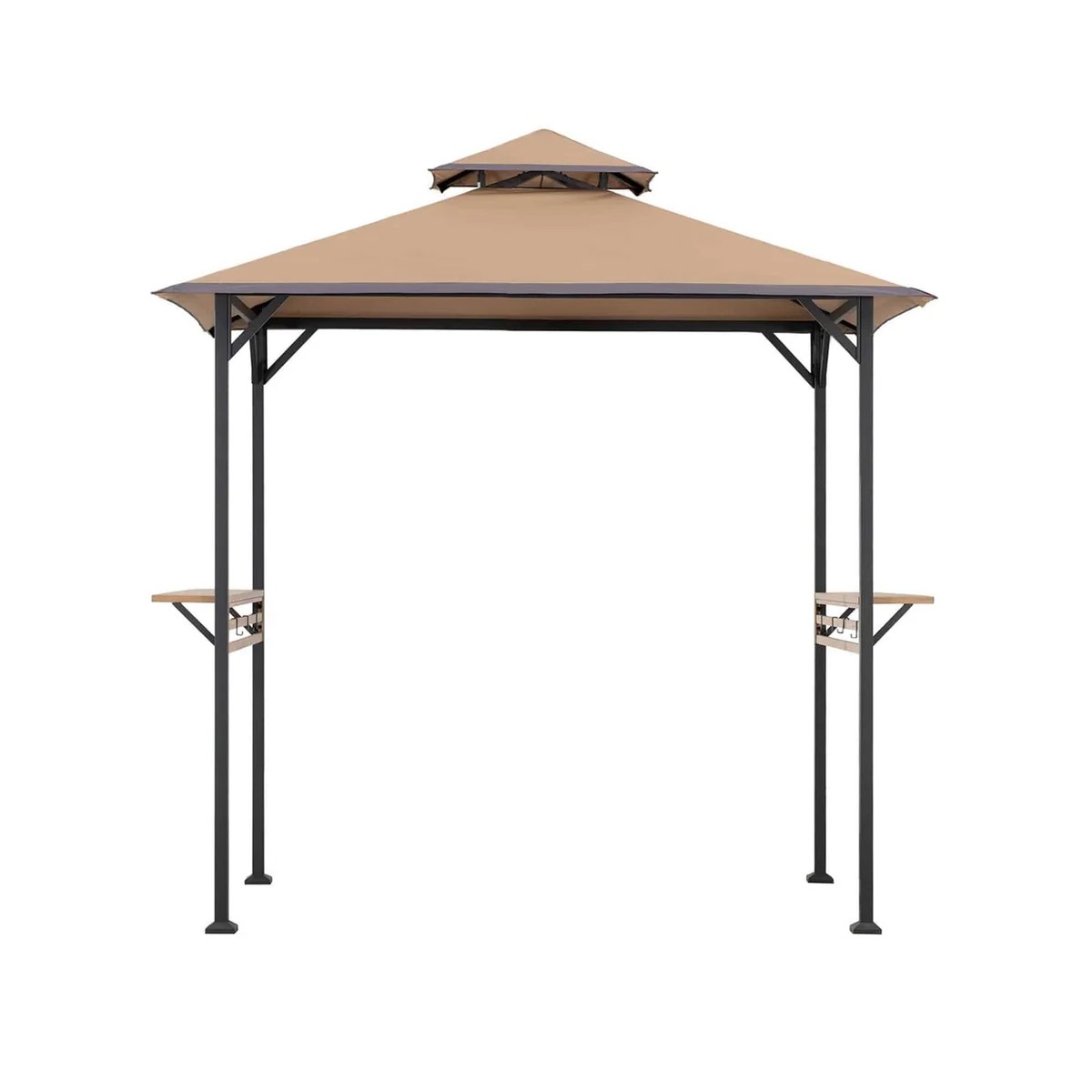
The Classic Double-Roof Soft-Top Grill Station, 8×5 illustrates this approach. Its 8 ft. L × 5 ft. W × 8.5 ft. H footprint uses a rust-resistant, powder-coated steel frame and weather-resistant fabric canopy. Two integrated side shelves provide staging space, while built-in utility hooks organize cooking tools. The ventilated two-tier roof allows wind and grill smoke to pass through, and the canopy is made from CPAI-84 fire-retardant-certified polyester. Its listed wind rating is 35 MPH, so local weather conditions and manufacturer guidance should remain part of installation and use decisions.
Keep Preparation Safe And Adaptable
Food preparation requires separation between raw and cooked ingredients. Dedicated trays or containers can reduce unnecessary contact between surfaces, while cleaning supplies should remain accessible without occupying the main cooking area.
Traffic deserves equal consideration. Guests should not need to pass directly behind someone handling hot cookware, and children or pets should remain outside the active cooking zone. Positioning the prep station where it does not interfere with grill clearances or guest traffic can create a clearer working sequence.
Flexibility becomes useful during larger gatherings. Folding tables, movable carts, or removable storage containers can expand the preparation area when needed and then be cleared afterward. Such an arrangement avoids permanently filling a compact structure with equipment that may only be useful during occasional events.
Conclusion
Effective outdoor food preparation comes from thoughtful placement rather than simply adding more furniture. Clear separation between ingredients, cooking equipment, serving items, and guest traffic can make a compact cooking space considerably easier to manage. Under a grill tent, ventilation, heat clearance, surface hygiene, and weather conditions should remain central to the layout.
Choosing the right grill gazebo also means comparing its actual dimensions, roof construction, work surfaces, and intended operating conditions with the needs of the household. SUNJOY’s compact grill station demonstrates how integrated shelves, hooks, a ventilated two-tier roof, and a fire-retardant polyester canopy can bring several useful functions into one defined footprint.
