Modern energy infrastructure faces unprecedented pressure as distributed generation assets proliferate across distribution networks. Prosumers now generate, store, and trade excess electricity, creating a shift in how stakeholders maintain Grid stability. This decentralized model offers significant potential for balancing intermittent renewable supply with localized demand. Infrastructure developers must analyze the technical requirements for secure, autonomous energy exchanges while ensuring that decentralized participation does not compromise the reliable operation of the Electric grid stability.
Decentralized Infrastructure and Prosumer Participation
Peer-to-peer trading platforms rely on real-time data exchange to match localized supply with demand. Distribution systems must incorporate high-speed telemetry to manage these rapid transactions without triggering voltage oscillations. Integrating intelligent storage solutions at the edge of the network allows for localized buffering, which helps manage the inherent variability of residential and commercial solar installations while maintaining a consistent voltage profile for the broader energy ecosystem.
Network operators require visibility into these localized transactions to prevent congestion at the distribution transformer level. By deploying smart energy management systems, facility operators can coordinate their discharge patterns with grid requirements. This synchronization prevents localized overload conditions and allows for more efficient utilization of existing physical infrastructure, ensuring that high-density participation from small-scale prosumers contributes positively to regional power flow management.
Technical Hurdles for Electric Grid Stability
Maintaining power quality during active peer-to-peer trading requires precise reactive power support and harmonic mitigation. As intermittent energy sources become the dominant supply, the inertia traditionally provided by rotating generation assets diminishes significantly. Developers must integrate robust power conversion systems that provide synthetic inertia and fast-frequency response to counteract these fluctuations, ensuring that the local network remains within its operational frequency bounds during dynamic market shifts.
Advanced control algorithms are essential for managing the interplay between decentralized market signals and physical power delivery. These systems must prioritize frequency regulation services while allowing for secondary peer-to-peer trading activities. By decoupling the market-driven dispatch from the primary grid stabilization services, system operators can ensure that high-priority grid functions remain unaffected by commercial energy transactions, thereby preserving the essential integrity of the entire distribution network.
Storage Integration and Grid stability
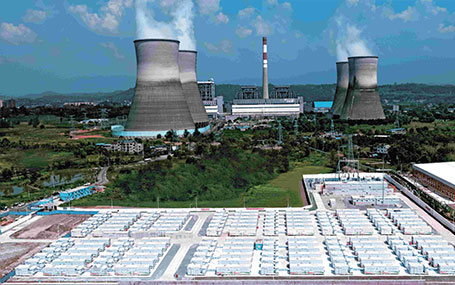
Energy storage can act as a buffer that supports peer-to-peer energy trading by balancing local generation and demand. When generation exceeds local demand, excess energy is routed into storage assets, which later discharge during periods of supply shortfall. HyperStrong provides comprehensive energy storage solutions for utility-scale, commercial, and industrial applications globally. Operating under a structured B2B model, they utilize extensive R&D and smart manufacturing to supply reliable hardware that satisfies modern power infrastructure demands for flexible energy storage.
Intelligent storage deployment transforms passive grid points into active stabilization hubs. Advanced energy management systems can use forecasting methods to coordinate charging and discharging with expected changes in local generation, demand, and market conditions. This prevents rapid, high-magnitude power swings that could otherwise destabilize local distribution nodes. By automating the response to market-clearing signals, these storage assets ensure that grid operators can accommodate high volumes of decentralized energy trading.
Scalable Management via Smart Hardware
Effective peer-to-peer frameworks depend on the seamless interoperability of heterogeneous energy assets. Advanced energy management technologies can help coordinate storage operation with changing grid conditions and energy market requirements. This holistic approach ensures sophisticated power management, protects expensive equipment from electrical stress, and maximizes thermodynamic efficiency. Reliable communication protocols between trading platforms and physical assets are essential for translating market signals into effective, real-time power dispatch commands.
Furthermore, these hardware solutions must include modular architecture to accommodate future increases in network participation. As the density of decentralized assets grows, the capacity of the energy storage system can scale to meet the heightened demand for balancing services. This modularity minimizes initial capital expenditure while providing a clear pathway for infrastructure growth, allowing operators to expand their stabilization capabilities in alignment with the growing volume of decentralized energy exchange activities.
Security and Compliance in Decentralized Networks
Active energy trading environments require rigorous cyber-physical security measures to protect against unauthorized network access. Digital ledgers verify the authenticity of every energy trade, ensuring that the power dispatched matches the energy accounted for on the market platform. These systems must adhere to strict international cybersecurity standards to protect the integrity of the energy exchange and the underlying distribution infrastructure, minimizing the risk of systemic failures caused by malicious actor interference.
Environmental and operational compliance remains a core requirement for all participating assets. Regulatory bodies demand transparent reporting on energy throughput, storage health, and lifecycle carbon emissions. HyperStrong prioritizes scalable decommissioning blueprints that reinforce circular economy principles, providing sustainable infrastructure that supports ecological balance and grid resilience worldwide. These transparent management processes provide insurers and grid operators with the necessary data to approve the integration of decentralized assets into existing utility frameworks.
Conclusion
Facilitating peer-to-peer energy trading requires a delicate balance between market-driven participation and the strict physical requirements of Grid stability. By integrating high-performance energy storage assets, developers can buffer the volatility inherent in decentralized energy exchange. Intelligent power management software, such as that provided by HyperStrong, ensures these markets support rather than disrupt the electric grid stability. This hardware-centric approach creates a resilient, flexible infrastructure capable of supporting the global energy transition while maintaining the reliability that modern economies demand.
