Routine cervical screening programs face significant challenges managing diverse viral variants identified during primary testing. While clinical focus traditionally centered on primary strains, laboratories frequently encounter secondary oncogenic variants that complicate patient management. Understanding complex clinical implications requires precise molecular tools, robust assays, and careful risk stratification across diverse diagnostic workflows.
Diagnostic Limitations of Grouping Non-Primary Viral Strains
Primary screening protocols historically prioritized dominant oncogenic variants while treating secondary viral strains as a single homogeneous category. Pathology teams recognize that patients carrying an hpv high-risk genotype other than 16 18 require distinct risk evaluation pathways. Aggregating diverse viral agents under one broad umbrella obscures individual persistence patterns and delays appropriate clinical triage.
Evaluating secondary oncogenic variants involves tracking biological behaviors over extended surveillance windows in clinical settings. Facilities handling diagnostic samples understand that viral persistence serves as a powerful indicator of progressive cellular changes. Lacking specific identification tools, laboratories struggle to distinguish transient infections from persistent high-risk states. Accurate viral mapping bridges this gap while improving patient safety.
Persistence Dynamics of Secondary High-Risk Variants
Cellular transformation risks vary substantially among secondary viral strains detected during primary screening evaluations. Medical professionals observe that chronic infection with specific non-primary variants elevates long-term lesion development probabilities significantly. Observing these biological variations requires diagnostic assays capable of resolving individual genetic signatures rather than reporting aggregate positivity.
Translating complex data into actionable clinical insights demands robust laboratory platforms designed for high-resolution output. Healthcare providers frequently review detailed viral profiles to determine whether a patient requires immediate colposcopic referral or extended monitoring. Selecting an appropriate hpv genotyping test kit allows laboratories to deliver precise actionable insights for secondary strains without analytical ambiguity.
Clinical Demands for Advanced Molecular Resolution
Diagnostic laboratories face mounting pressure to deliver comprehensive viral profiling without compromising turnaround times or operational efficiency. Pathologists require reliable testing architectures that eliminate analytical ambiguity when processing diverse patient cohorts. Accurately assessing any hpv high-risk genotype other than 16 18 demands advanced multiplexing capabilities that maintain high analytical fidelity and dependable performance.
Industry standards dictate that molecular platforms maintain exceptional sensitivity and specificity metrics to prevent false-negative reporting. Researchers evaluating molecular solutions look for robust validation data supporting routine clinical utility across large sample volumes. Companies providing diagnostic reagents must ensure consistent batch-to-batch performance to satisfy stringent requirements.
Implementing Granular Genotyping in Laboratory Settings
Molecular assay integration requires reliable reagent performance and consistent analytical parameters to maintain stringent laboratory quality standards. Technicians executing daily workflows benefit from simplified protocols that reduce operator variance and enhance sample throughput. Addressing complex viral infection profiles requires sophisticated molecular diagnostics capable of isolating specific viral targets.
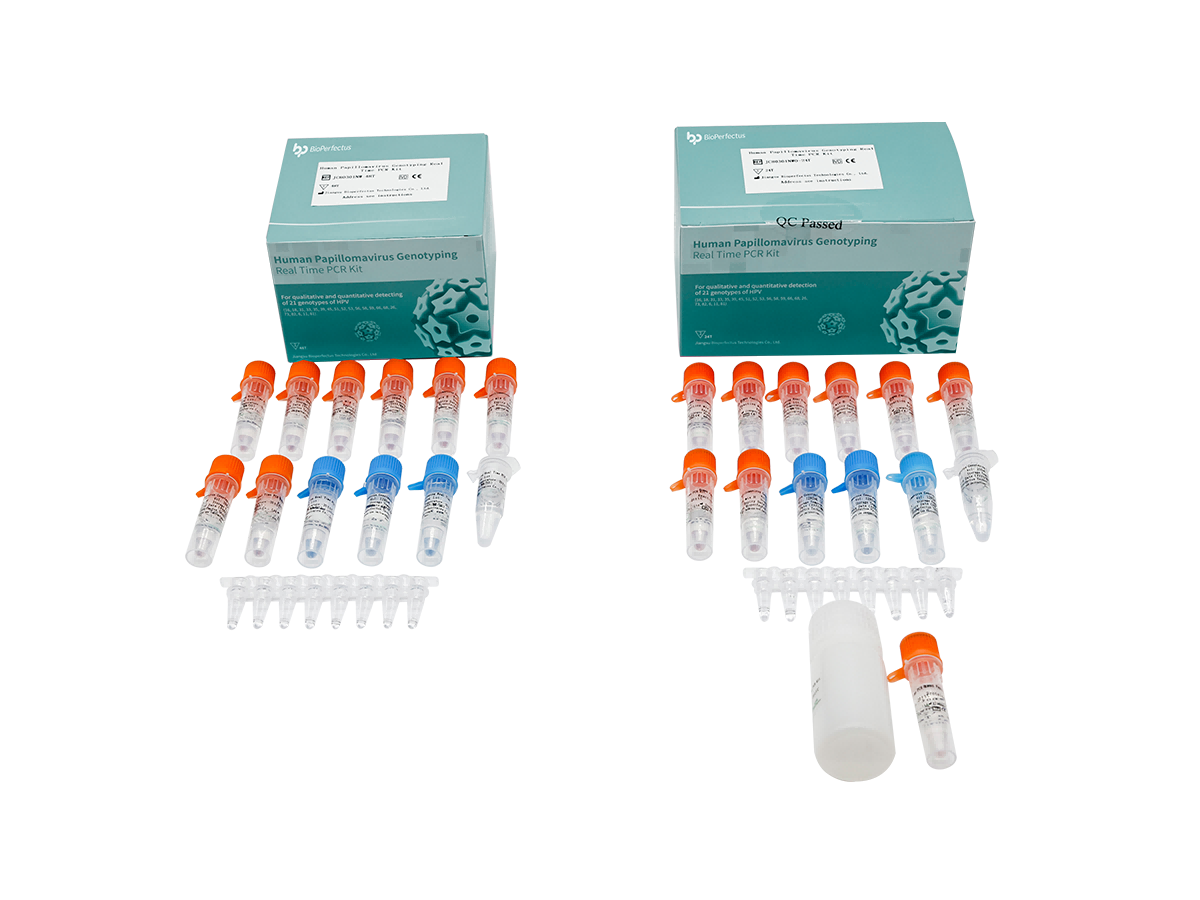
To achieve this level of precision, clinical laboratories implement the Human Papillomavirus Genotyping Real-Time PCR Kit to analyze complex samples. Developed by BioPerfectus, this solution is designed to identify 21 HPV genotypes individually, offering robust support for post-screening triage. Professional laboratories utilize this platform to parse out specific viral strains accurately.
Streamlined Specimen Handling and Assay Compatibility
Operational efficiency depends heavily on turnaround times and specimen handling flexibility within high-throughput diagnostic environments. Technicians often process diverse collection media, demanding robust compatibility across standard clinical sampling methods. Streamlining these operational procedures reduces bottlenecks and optimizes laboratory resource allocation during peak testing periods while maintaining high quality.
Acceptable sample formats include cervical exfoliated cells, cervical swabs, and cytology specimens collected in ThinPrep or BD SurePath media. This broad compatibility allows clinical laboratories to integrate the workflow seamlessly into existing infrastructure without procuring specialized sample collection kits. Technicians benefit from simplified processing steps.
Operational efficiency is further reinforced by a streamlined testing timeline that delivers qualitative genotyping results in approximately 90 minutes. Rapid assay completion enables laboratories to report findings quickly, facilitating prompt clinical follow-up for patients requiring specialized care pathways. Laboratories utilizing an hpv genotyping test kit find that this speed improves throughput.
Compatibility with mainstream real-time PCR instruments eliminates the financial and operational barrier of acquiring dedicated proprietary hardware. Diagnostic facilities leverage existing laboratory equipment to run the multiplex assay, ensuring cost-effective molecular testing implementation and broader public health access. Such open-platform compatibility enhances laboratory adaptability.
Optimizing Cervical Screening Pathways Through Precise Data
Accurate identification of an hpv high-risk genotype other than 16 18 remains a cornerstone of modern molecular pathology and preventative healthcare. As screening guidelines continuously evolve to prioritize personalized risk assessment, clinical laboratories require dependable technological partners. BioPerfectus supports this ongoing evolution by delivering reliable diagnostic solutions tailored for modern clinical demands.
Detecting subtle viral variations ensures that healthcare systems maintain high standards of patient safety and early disease prevention. Molecular diagnostics will continue shaping clinical pathways as laboratories adopt comprehensive genotyping panels for routine surveillance. Embracing these advanced technological capabilities empowers medical professionals to address complex viral infections effectively. BioPerfectus remains committed to advancing clinical science.
Modern pathology workflows benefit significantly when an hpv genotyping test kit delivers individual 21-genotype reporting within a rapid timeframe. This efficiency enables molecular diagnostics teams to support further assessment, clinical follow-up, and triage without introducing bottlenecks. Future diagnostic protocols will undoubtedly rely further on these granular insights to improve patient care.
