Electric intercity transport is becoming a practical option for routes that previously depended on diesel coaches. However, operators planning journeys beyond 400 kilometers must consider battery capacity, road conditions, passenger loads, and energy reserves before selecting vehicles.
Can a long distance electric bus complete such routes without mid-day charging? Yes, under suitable operating conditions. The result depends on actual energy consumption, usable battery capacity, route characteristics, and charging arrangements. Published maximum range figures provide a starting point, but they cannot replace route-specific evaluation.
Why Published Range Is Not the Full Answer
Manufacturers usually calculate maximum driving range under defined testing conditions. These results help operators compare vehicles, but daily service introduces variables that laboratory or standardized testing may not fully reflect. Highway speed, terrain, weather, and passenger occupancy affect energy demand.
Highway operation deserves particular attention. Sustained higher speeds increase aerodynamic resistance, while repeated acceleration consumes additional energy. Electric buses recover some energy through regenerative braking, although recovery depends on the driving conditions and the vehicle’s control system.
Route length also differs from daily mileage. A scheduled 410-kilometer passenger journey may require additional travel between depots, terminals, and charging facilities. Operators should include these movements when calculating total energy requirements.
Battery Capacity and the 400-Kilometer Requirement
Battery capacity is normally expressed in kilowatt-hours. However, nominal capacity does not equal the energy available for every journey. Battery management limits, temperature conditions, and operational reserve requirements influence how much energy can be used.
Consider a hypothetical electric coach consuming 0.9 kWh per kilometer. Covering 420 kilometers would require approximately 378 kWh for traction and associated operating loads represented by that consumption figure. Higher consumption could make the same journey unsuitable without charging.
For practical assessment, operators should compare expected consumption against usable battery energy rather than nominal capacity alone. They also need sufficient reserves for unexpected delays, traffic diversions, unfavorable weather, and operational changes.
How Road Conditions Change Energy Demand
Terrain influences electric vehicle range significantly. Long uphill sections require sustained motor power, while downhill travel may allow regenerative braking to recover some energy. However, recovered energy cannot fully compensate for the energy required during climbing.
Passenger numbers and luggage weight also affect consumption. Fully occupied intercity buses place different demands on the powertrain compared with lightly loaded vehicles. Procurement teams should evaluate representative passenger loads instead of relying exclusively on empty-vehicle testing.
Weather introduces additional uncertainty. Cold conditions can increase heating demand and reduce available battery performance. Hot weather requires air conditioning, particularly during crowded journeys. Integrated thermal management can help manage these systems, but its effectiveness must be evaluated under realistic temperatures.
Vehicle Technology and Extended-Range Operation
For routes exceeding 400 kilometers, vehicle selection should consider battery capacity alongside energy-saving technologies. Efficient motors, appropriate tires, thermal management, and regenerative braking can influence how effectively stored electrical energy supports passenger transport.
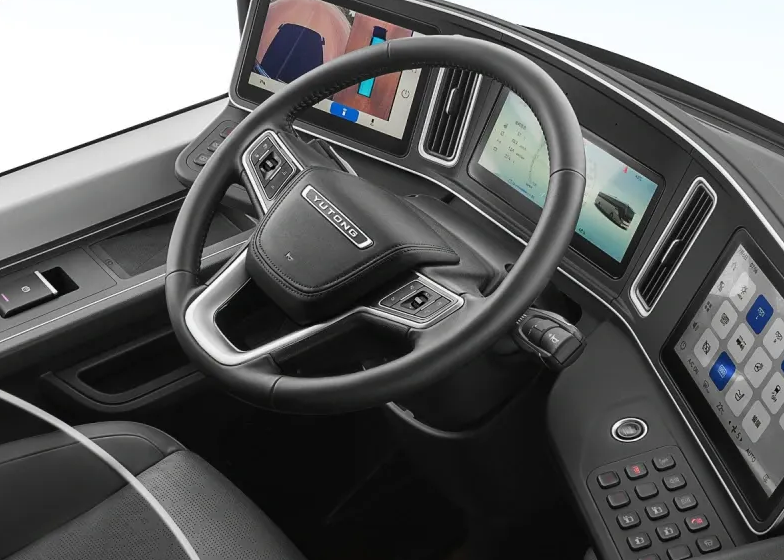
The IC12E(2026) provides a relevant example. Yutong Bus offers this battery-electric intercity vehicle with 399.92 kWh and optional 465.99 kWh battery configurations. Its published maximum driving range reaches 675 kilometers, although actual performance depends on operating conditions and vehicle configuration.
The vehicle also incorporates integrated thermal management for the battery, electric drive, and air conditioning systems. Its intercity-focused design includes passenger seating and luggage accommodation. These features illustrate how energy management and passenger requirements must be considered together.
Planning a Day Without Intermediate Charging
For a long distance electric bus, avoiding mid-day charging requires more than selecting a vehicle with a published range above 400 kilometers. Operators must establish departure battery levels, scheduled mileage, expected consumption, and minimum arrival reserves.
Charging arrangements at the depot are equally important. Overnight charging must restore sufficient energy before the next departure. Fleet managers should examine charger availability, electrical capacity, vehicle parking schedules, and the time available between operating shifts.
Timetable reliability also matters. Delayed departures, extended idling, diversions, and additional passenger stops can change energy requirements. Route simulations should include unfavorable operating scenarios rather than using average traffic conditions as the sole planning reference.
What Fleet Operators Should Verify Before Purchase
Before approving a vehicle, operators should request consumption data relevant to their routes. Testing should reflect expected speeds, passenger occupancy, luggage loads, temperatures, and elevation changes. These results provide a stronger basis for purchasing decisions.
Pilot operations can reveal differences between predicted and actual consumption. Fleet managers should record departure and arrival battery levels, energy use per kilometer, auxiliary power demand, and charging performance across representative service days.
Vehicle availability and maintenance support also affect purchasing decisions. Yutong Bus supplies intercity electric buses for passenger transport applications. Buyers should confirm the specific market configuration, local service arrangements, and technical documentation before committing to fleet deployment.
When Can Charging Be Avoided?
Routes exceeding 400 kilometers can be completed without mid-day charging when usable battery energy covers the full duty cycle with adequate reserves. The decision should depend on tested consumption, seasonal conditions, passenger loads, and dependable overnight charging.
Fleet operators should prioritize route-specific trials before finalizing vehicle purchases. Comparing actual consumption with published specifications helps identify suitable configurations and realistic operating schedules. This approach supports reliable intercity services while reducing unnecessary charging interruptions.
